

Why Does Disney Keep Killing the Parents?
Have you ever noticed this?

Have you ever noticed this about Disney movies?
So many of them don’t have parents.
Not like “the parents are busy at work” kind of thing.
Disney has been quietly running what I like to call The Dead Parent Initiative for decades.
Let’s start with the obvious ones.
The Lion King
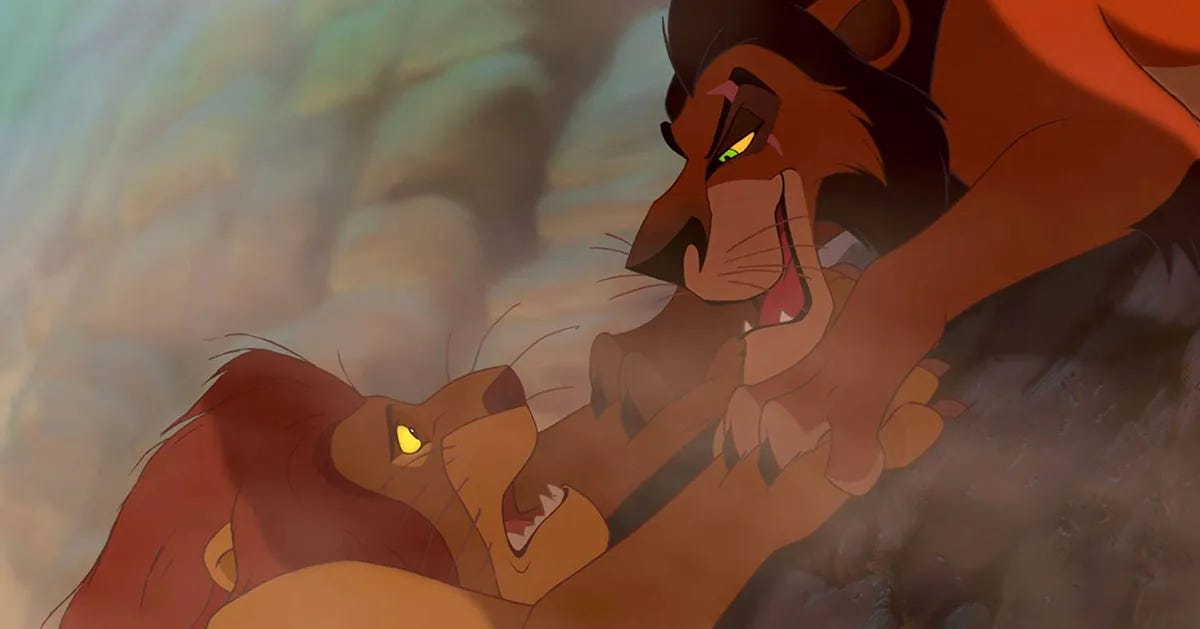
Scar straight up wacks Mufasa off a cliff into a stampede and walks away with the cleanest alibi in animated history.
Simba finds his father’s body and nudges him to wake up while millions of children around the world experience emotional devastation before they even understand what emotional devastation is. Besides the children who lost someone young, this could be very triggering.
I’m 36 years old and I’m pretty sure I’ll still cry if I rewatch this.
Bambi
Bambi’s mom gets shot on site by a hunter.
To this day it might be the most realistic death scene in any Disney movie I can think of.
Although I will admit something. I grew up in New Jersey so I am a bit desensitized because I saw a lot of Bambi deaths on the side of the road.
Finding Nemo
Disney decided to waste absolutely no time here.
Within the couple minutes of the movie, Nemo’s mom Coral gets eaten by a barracuda. And, just like that grief is introduced into the film.
But they didn’t stop there.
The barracuda decided to make an omelette because all the eggs were gone, too.
Frozen
Full transparency: I’ve never actually seen Frozen.
But apparently Anna and Elsa’s parents get taken out early in the film in what I assume was some kind of two-for-one deal.
Another entry into the club.
Beauty and the Beast
I don’t recall Belle’s mother ever mentioned in the original movie. Poor Maurice. We just assumed something happened to her.
Disney later clarified in the 2017 remake that she died of illness, which means Belle officially qualifies as another Disney character growing up with a missing parent due to death.
Pocahontas
Same story.
Pocahontas doesn’t have a mother in the film either.
Although the movie does insinuate an afterlife in that her mother’s spirit guides her through the wind when she asks for direction.
Which honestly might be one of the more poetic acknowledgments of the afterlife Disney has done.
But still.
No mom.
Final Thoughts
This is the part that’s more interesting to me than just the pattern itself.
For a lot of us, this may have been how we were first introduced to grief and loss.
Not through a funeral.
Not through a family conversation.
Not through someone sitting us down and explaining what death means.
Through story.
Through lions and deer and fish and princesses.
And that’s what makes it fascinating.
Because we live in a world where death is everywhere, but talking about death still feels weird. We see it on the news. In movies. In history. In entertainment. In true crime. In headlines. In hospitals. In real life. Death is normalized all around us.
But the conversation about it?
Still awkward. Still avoided. Still treated like something we should whisper about, postpone, or clean up with softer language.
And yet these Disney movies were doing something kind of profound, whether intentionally or not.
They were creating a safe space through story for kids to encounter loss before they had to experience it in real life.
That doesn’t mean it didn’t hurt. Clearly it did. Ask anyone who still tears up when Simba says, “Dad?”
But story gives us a container.
It lets us feel the feeling without the full consequence. It lets us witness grief before grief becomes ours. It lets us rehearse pain in a place that still feels safe.
And maybe that’s part of why these movies stay with us.
Because beneath the songs and animation and talking animals, they were quietly introducing us to one of the hardest truths of life:
People leave.
Love can be interrupted.
Loss changes you.
But somehow the story keeps going.
And lastly, I’d like to give a respectful shoutout to The Incredibles for the radical creative choice of letting both parents live.